MUSIC
What instruments are in a jazz band?
Here’s what each instrument in a jazz band does, what the small bands are called, who plays in each, how a big band is laid out and which size suits a wedding, a dinner or a company event.
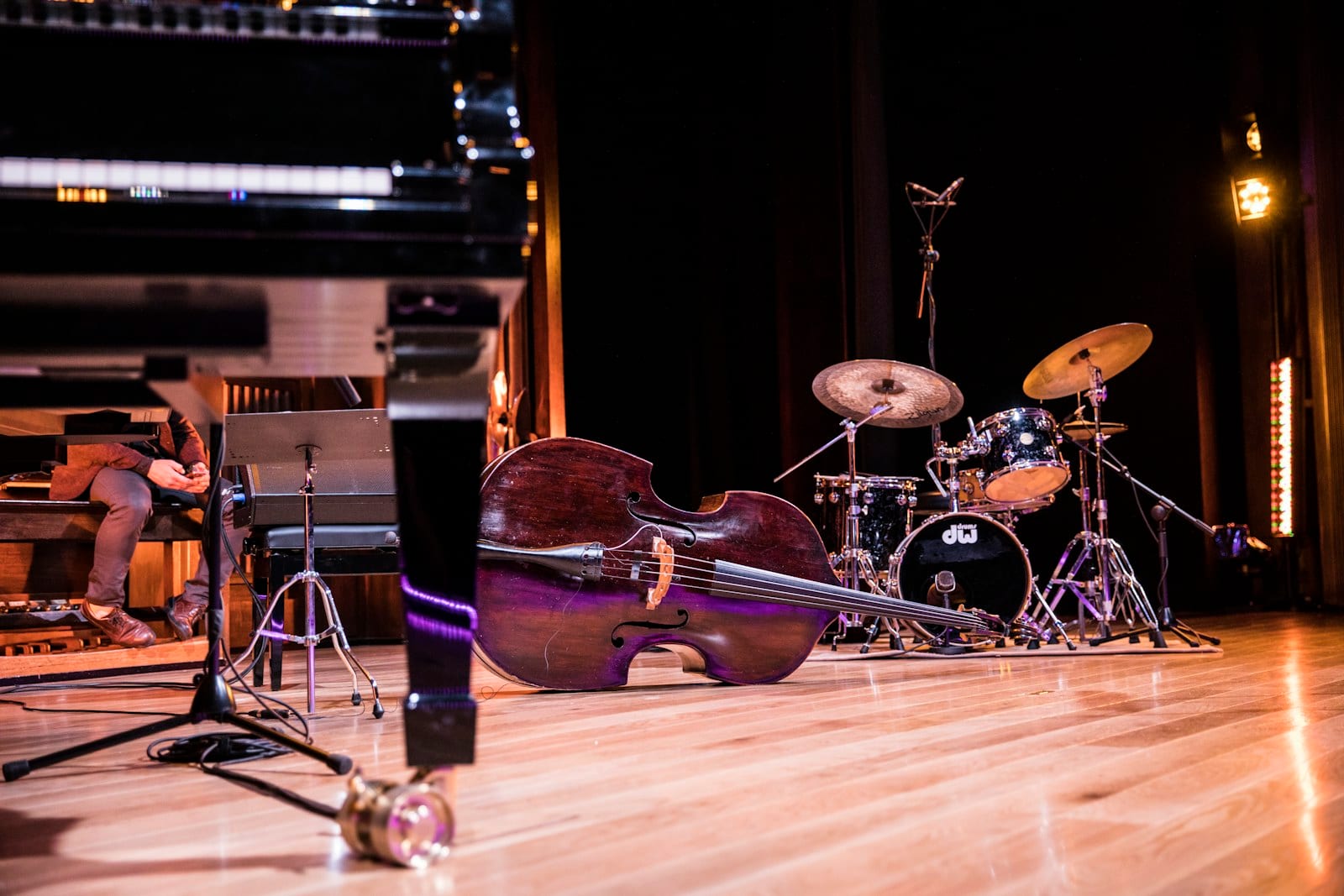
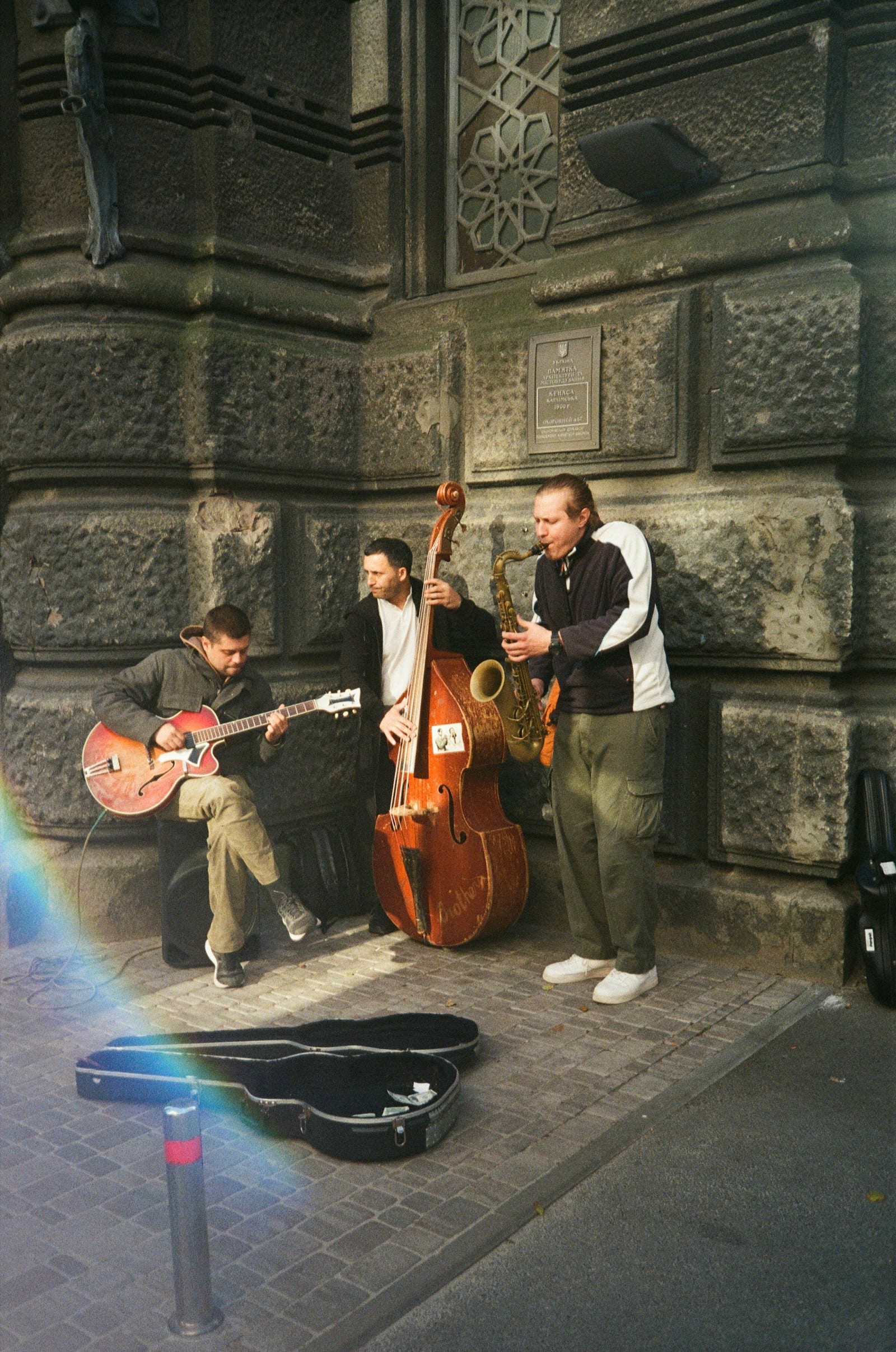
- A jazz band is built on a rhythm section of bass, drums and a piano or guitar, and in most bands a saxophone, a trumpet, a trombone or a singer plays the melody on top.
- A small jazz band is called a combo and takes its name from how many musicians are in it, from a duo of two to a quintet of five and beyond.
- A big band has around seventeen musicians, with sections of saxophones, trumpets and trombones over a rhythm section, and they play from written arrangements.
- For a wedding, a dinner or a company event, a duo or a trio stays quiet enough for people to talk, and a quartet with a horn or a singer out front is a great size for dancing.
When you hear a jazz band at a cocktail hour, it can be hard to tell who’s doing what. Most jazz bands are built on a rhythm section, which means the bass, the drums and a piano or a guitar. Between them they keep the time and play the chords. On top go the instruments that play the tune, usually a saxophone, a trumpet, a trombone or a singer, and in the smallest bands the piano or guitar plays the tune itself.
Which of those instruments you’ll hear depends on the size of the band. A jazz band can be as small as two musicians or as large as a big band, and each size in between has a name and a usual lineup.
What instruments are in a jazz band? #
The first four instruments here make up the rhythm section. The saxophone, the trumpet and the trombone are what jazz musicians call the horns.
- Piano. The piano plays the chords behind whoever has the melody, and it gets solos of its own.
- Guitar. The guitar does the same job as the piano, so a small band often has one or the other. In jazz it’s most often an electric guitar played with a clean, warm tone.
- Upright bass. Also called the double bass, it’s the big bass that stands on the floor, plucked with the fingers. On a swing tune it plays one note on every beat, which musicians call a walking bass line, and the rest of the band keeps time with it. Some bands swap it for an electric bass guitar.
- Drums. This is a full drum kit, and the drummer keeps time mostly on the ride cymbal, the large cymbal to one side of the kit. It’s played with sticks, or with wire brushes for a softer sound.
- Saxophone. It comes in four common sizes, soprano, alto, tenor and baritone, from high to low. Alto and tenor are the two you’ll hear most in a small band.
- Trumpet. The trumpet is the high, bright brass horn. With a mute in the open end of the horn, it’s softer and its tone changes.
- Trombone. The trombone is the low brass horn with a slide. In a larger band it fills out the harmony under the trumpets and saxophones.
- The singer. The singer handles the melody and the words, then steps aside while the band plays its solos.
Less often you’ll see a clarinet, a flute or a vibraphone, which looks like a xylophone with metal bars and is played with mallets.
What is a small jazz band called? #
A small jazz band is called a combo, and each size takes its name from how many musicians are in it.
- A duo is two musicians. Common jazz duos are guitar and upright bass, piano and bass, or a singer with a piano or a guitar. Without a drummer the bass keeps the pulse, and a duo is the quietest jazz band you can book.
- A trio is three, most often a piano or a guitar with bass and drums, and the drums give it a steady beat under the melody. Curious about the other trio lineups, or which one suits a private event? Check out what a jazz trio is.
- A quartet is four, a rhythm section plus a saxophone, a trumpet or a singer out front. With someone else on the melody, the piano or guitar is free to play the chords behind it. The Dave Brubeck Quartet, the band on Take Five, was piano, alto saxophone, bass and drums.
- A quintet is five, and the usual lineup is a trumpet and a tenor saxophone in front of piano, bass and drums. The two horns play the melody together, either on the same notes or in harmony. Miles Davis’s quintets in the 1950s and 60s had that lineup.
- Sextets, septets and octets have six, seven and eight musicians, and each added musician is usually another horn, such as a trombone or a second saxophone.
What instruments are in a big band? #
A big band is a jazz band of ten or more musicians, and the standard lineup today is seventeen, arranged in four sections. The saxophone section is five players, usually two altos, two tenors and a baritone. Then come four trumpets and four trombones, and a rhythm section of piano, guitar, bass and drums. Many big bands also have a singer.
A big band plays from written arrangements. The sections trade phrases back and forth and come together for the loudest passages, and the solos go in the spaces the arranger leaves for them. It’s the sound of the swing era of the 1930s and 40s, when bands like Duke Ellington’s and Count Basie’s played for dancing.
What does a jazz band play? #
A jazz band plays mostly standards. A jazz standard is a song so widely played that jazz musicians all know it, which means a band can play it together without rehearsing it first. Many come from the Broadway shows and Hollywood films of the 1920s to the 1950s, the songs called the Great American Songbook, and others were written by jazz musicians themselves. All the Things You Are is from a 1939 Broadway musical, and Take the A Train was written for Duke Ellington’s orchestra. A band usually plays the melody once through, takes turns improvising solos over the same chords, and plays the melody again to end the song.
Which size of jazz band to book #
We can book jazz at every size from a single guitarist to a quartet, and all of them play the standards. What to book depends on how many guests you’re expecting and whether there’ll be dancing.
The jazz duo is upright bass and guitar at a volume that lets people chat, and it’s a great choice for a cocktail hour, a dinner or both. For a bigger crowd or a longer night, the trio adds drums, played with brushes so people can still talk over the music. Add a horn or a singer and you have a quartet, which can lean into swing and soul and get people dancing.
Changes Jazz Trio is a Denver trio of guitar, fretless bass (a bass with a smooth, singing tone) and drums that plays the standards with a modern edge. They can add a saxophone and play as a quartet if you’d like the music to be more of a feature at a gala or a client dinner.
At a wedding, the music can grow through the day, from a solo guitarist or a duo at the ceremony to a quartet for the dancing. Learn more about a jazz band for a wedding, or about a corporate jazz band for a company event with speeches and awards. Want a general idea of what each size costs? Check out what a jazz band costs in Denver.
Sources
- Herbie Hancock Institute of Jazz (n.d.). The Swing Era. Jazz in America. Read the source
- Herbie Hancock Institute of Jazz (n.d.). Glossary. Jazz in America. Read the source
- Crist, S. A. (n.d.). “Time Out”: The Dave Brubeck Quartet (1959). National Recording Registry, Library of Congress. Read the source
- Encyclopaedia Britannica (n.d.). Miles Davis. Encyclopaedia Britannica. Read the source
- Songwriters Hall of Fame (n.d.). Oscar Hammerstein. Songwriters Hall of Fame. Read the source
- Hansen, L. (2009). How Ellington Took 'The A Train'. Weekend Edition Sunday, NPR. Read the source