PLANNING
How to choose music for an event
We start with who is coming and what the night is for. Then we check the space and the schedule. Genre comes last. Here is how we match a crowd to an act.
A surprising number of people call us and say they want music. That’s a fine place to start. Then we ask who’s going to be there, what the night is for, what the space is like and how the evening runs, and by the end of those answers we usually know who to send.
To choose music for an event, we start with who is coming and what the night is for. Then we check what the space allows and how people will feel when they arrive. Genre comes last.
Who is coming? #
This is a game of profiling. We’re dealing in generalities, so the first two things we ask about are age and industry.
Age tells us how much attention people will put up with having pulled away from what they came to do. Younger crowds can usually take music that is catchier, louder and more energetic. Somewhere around 50, sometimes earlier, loud energetic music turns into something people enjoy as nostalgia and tolerate less as an interruption, and they tolerate it less the older they get. In general.
We’ve written about party music for all ages and about what 80 year olds listen to.
When the ages run wide or the industries are mixed, we can’t lean on the profile. Then we look at what the night is for.
Should you pick by genre? #
Usually we don’t. Some music is built for one setting. Metal is something fans seek out and pay to give their full attention to, and it would be awful in the background of a cocktail hour. That’s an exaggerated example, and the same distinction applies to quieter choices.
Good live music often crosses genres anyway. So we pick by the theme and the purpose of the event, and let a good act blend hits from several generations and styles.
What is the night for? #
We hear three answers.
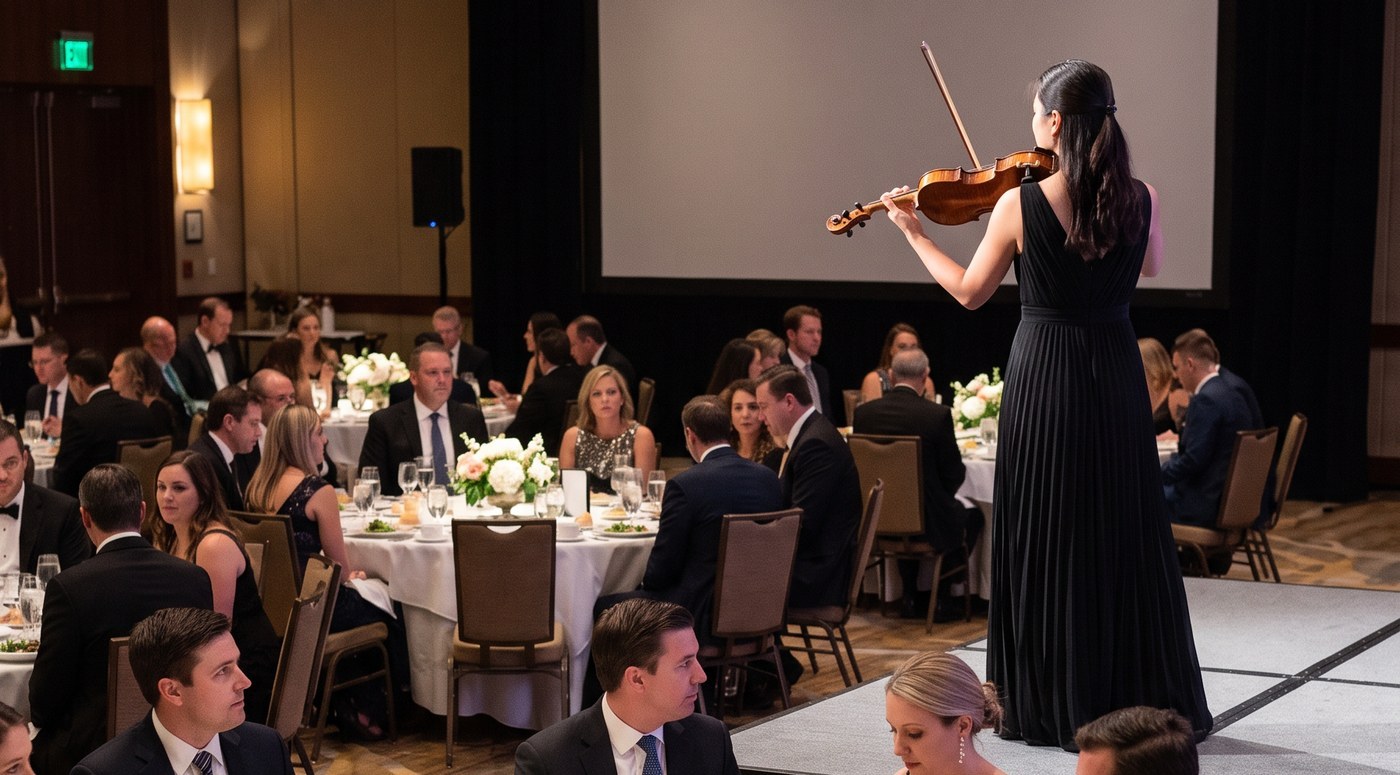
To complete an elegant evening. People spend a lot on linens, catering and the space. The sound has to match that class for the evening to feel finished. That’s often jazz or a string ensemble: our jazz duo or our classical strings.
To get people to let loose. If the goal is to draw attention and give people a place where it’s fine to dance, we’d put on a real entertainer, someone skilled at giving a crowd energy: Quadrasonic, Little Moses Jones or our millennial party rock band. One note for corporate events: we’d check that nobody feels pressure to look professional that night, or that entertainer will be looking at a row of suits with their arms crossed. We wrote about how to get people to dance at a wedding.
To take people somewhere else. This is our favorite. We’d put on an act that sounds dreamy, like Roma Ransom, Dirty Flamenco or our mariachi band. Sounds people don’t hear every day make an event more memorable, especially alongside the food, the decor and a fully formed theme.
Not every corporate event is a party, and treating one like a party is a mistake. After long days of meetings, sessions or travel, the music has to match the energy people have left. We go into that in How to make a corporate event sound like Colorado and How a live band works around a corporate program.
| What the night is for | What we’d put on |
|---|---|
| To complete an elegant evening | Jazz or a string ensemble |
| To get people to let loose and dance | A real entertainer: Quadrasonic, Little Moses Jones or the millennial party rock band |
| To take people somewhere else | Roma Ransom, Dirty Flamenco or the mariachi band |
| To fill the time between conversations and the program | Familiar songs, kept low |
What does the space allow? #
It’s technical and a little boring, and it comes first: volume and amplification.
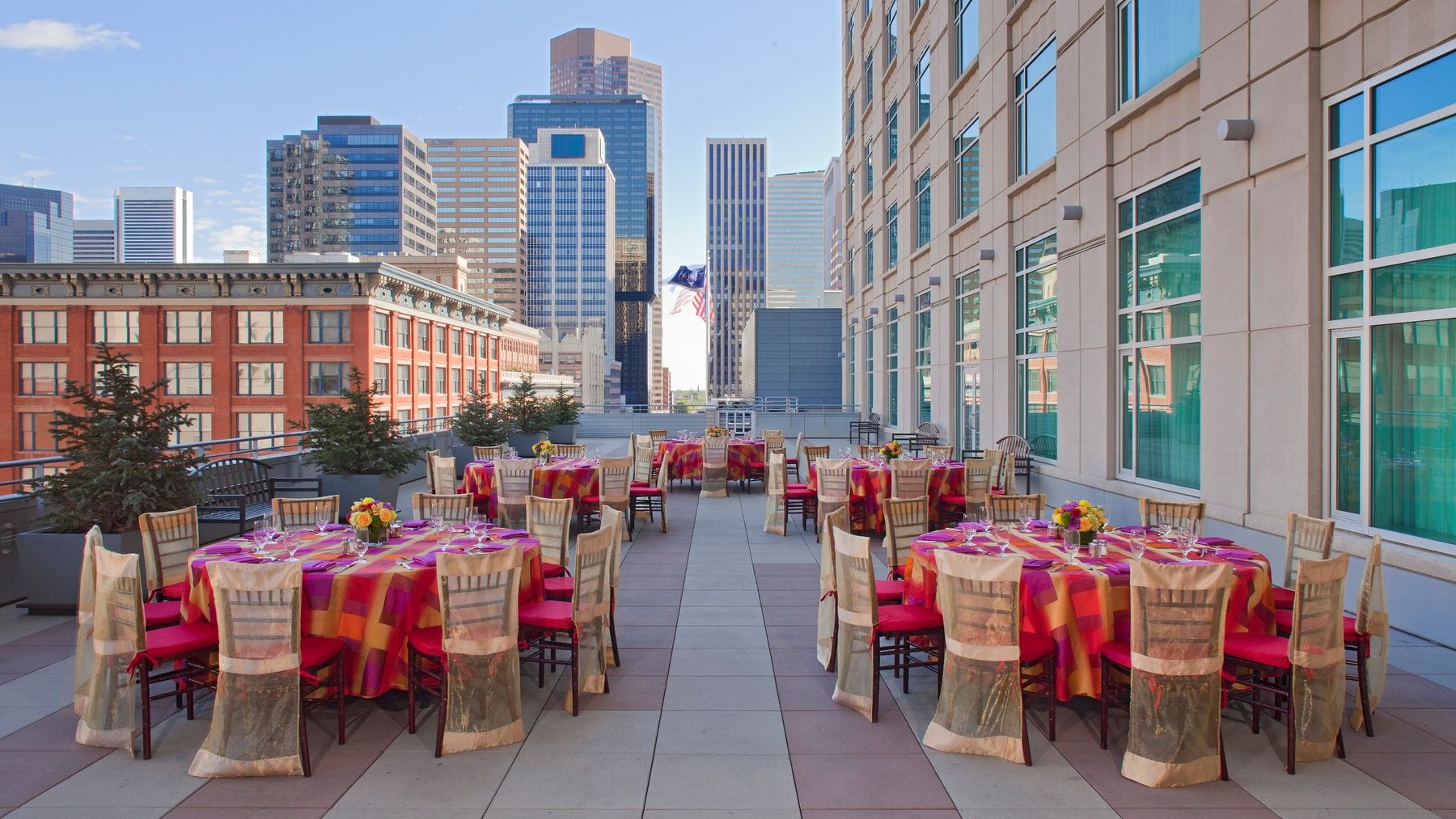
A string duo in a huge courtyard or hall is drowned out as soon as people start talking. In a private dining space the music has to sit below the level of conversation. Nothing derails a performance faster than being too loud, so we hold our acts to decibel guidelines for the space.
The reverse is true too. A party band in a small dining area would make a funny sketch on Saturday Night Live and an awful evening.
There’s more in How loud should background music be at a party?, What your venue does to the sound and How much sound system does an event need?
How will people feel when they arrive? #
A planner can only make a best guess. It depends on the travel, the meetings and the schedule people have had. Food and alcohol change the energy too, and so does whatever is happening the next morning, which decides whether people save their energy or let loose.
Our acts watch for this once they’re at the event. The great performers adjust their sets to the crowd in front of them.
What should you know before you call? #
Four things: who’s coming, what the night is for, roughly how big the space is, and how the evening runs. A budget helps too, and we wrote about how to read a band quote.