PLANNING
What a band needs from the venue
Stage footprint, power, load-in and the paperwork your venue and your finance team will both ask for. Including why published stage-size guidance runs to more than double what our own bands ask for.
- Stage-rental guidance for a seven to ten-piece band runs to 24 ft by 24 ft. A quartet asks for 14 ft by 10 ft and will play on 12 ft by 8 ft.
- Power is the requirement venues most often get wrong. A band needs its own dedicated circuits, within reach of the stage.
- Ask the band for its rider before you promise the venue anything. The rider is the figure that binds.
- Insurance, a W-9 and one itemised invoice are each a gate somebody else controls, and each gate has a queue, so they should arrive with the contract.
You booked the band. A week later the venue sends a form with four questions on it, and three of them are about things you’ve never had a reason to think about. How much stage. How much power. What time the truck arrives. There’s usually a fourth box asking for a certificate of insurance, and that one has a deadline.
None of these are hard questions. They’re just questions somebody has to actually ask the band, and what usually goes wrong is that nobody does until the week of, at which point the answer has consequences for a floor plan that was signed off in June.
How much stage does a band need? #
Search this and you’ll land on stage-rental companies, who publish recommendations by band size. Stage Rental puts a seven to ten-piece band on 20 ft by 24 ft at the small end and 24 ft by 24 ft in the middle, all at 4 ft of height.
Then look at what the bands you’d actually book here ask for. Our footprints are published, size by size, on the technical page: the footprint the band is comfortable on, and beside it the smallest stage the band will play on.
| Band size | Stage-rental guidance | What we ask for |
|---|---|---|
| Duo | 8 ft x 8 ft small, 8 ft x 12 ft medium | 8 ft x 6 ft, takes 6 ft x 5 ft |
| Trio | 12 ft x 16 ft small, 16 ft x 20 ft medium | 12 ft x 8 ft, takes 10 ft x 6 ft |
| Quartet | 12 ft x 16 ft small, 16 ft x 20 ft medium | 14 ft x 10 ft, takes 12 ft x 8 ft |
| DJ | Not published at this granularity | 6 ft x 4 ft, takes 6 ft x 3 ft |
The gap is the useful part. Take the quartet. The rental company’s middle recommendation for a band that size works out to 320 square feet. The quartet asks for 140 and will play on 96.
Both figures are right, and they answer different questions. The rental company is sizing for sight lines, for audiences who need to see over seated tables, and for events where the stage is a rented structure in a venue that has none. The band is describing the smallest footprint where nobody hits anybody. In a hotel ballroom with a built-in riser and eleven round tables you’d like to keep, the difference between those two numbers is a couple of those tables.
So the number that binds is the band’s, and it should come from the band. Ask for the rider before you promise the venue a footprint.
Power, which is where it usually goes wrong #
The John Parker Band’s published requirement is two standard 20-amp, 120-volt circuits within 25 feet of the stage, with 15 amps as the floor. That kind of requirement is typical, and there are two words in it doing most of the work.
Circuits. Two outlets on the same wall are very often the same circuit, which means the requirement gets ticked off on paper while the band still has one circuit. When that fails it fails at the worst possible moment, because everything switches on at once, and that moment is the downbeat of the first song.
Within 25 feet. Distance is a hard constraint. A band running power from across a ballroom is running cable across a path that guests and servers will walk for four hours.
The person who can answer both of these is the venue’s engineer or head of operations. Your sales contact will forward the question to them anyway, so start there, and ask early enough that the answer can still change something.
Load-in #
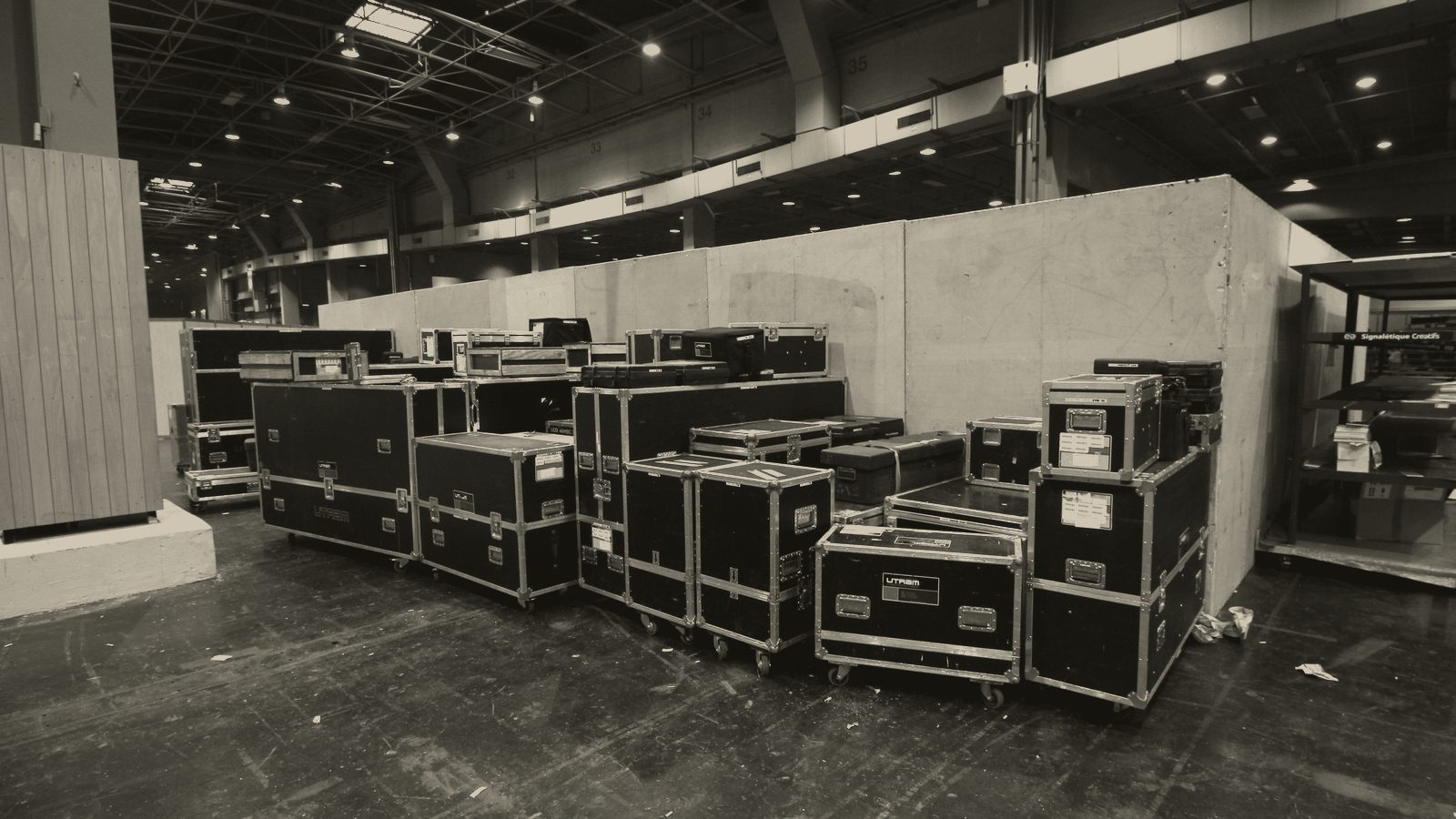
We coordinate load-in with the venue in advance, and the questions are always the same ones: dock times, elevator windows, how far the door is from the stage, where the cases sit during dinner, and what time the space has to be clear at the end.
That last one is worth pinning down before you sign anything. Strike takes as long as it takes, and it starts after the last song, so a hard curfew on the venue sets the time the music has to end.
Mountain venues #
Properties in the mountain corridor run on their own rules, and those rules differ by property rather than by town. Decibel limits and curfews are set by the venue, written into your contract with them, and honoured as written. Get them in writing from the property and send them to the band.
Travel is its own line. The I-70 corridor, meaning Vail, Beaver Creek, Breckenridge and Winter Park, adds a drive. Aspen, Telluride, Steamboat and Crested Butte add that drive plus a night’s lodging, billed as what it actually cost, which in that corridor is a number worth confirming before you commit to a date in February.
The paperwork your finance team will ask for #
This is the part that stops bookings, and it stops them late. A venue won’t let a vendor load in without a certificate of insurance, and accounts payable won’t pay an invoice that arrives without a W-9 on file.
Three documents settle it:
- A certificate of insurance naming your venue as additional insured. The venue is checking that document for its own name on it.
- A W-9, before accounts payable asks for it.
- One itemised invoice, with everything on separate lines, in a form finance will accept the first time.
Ours arrive in the same email as the contract. The reason to send them unprompted is that every one of them is a gate somebody else controls, and each gate has a queue.
Why the venue's questions come to you #
The venue asks you. You’re the contract holder, so the form comes to your inbox with a date on it.
It works when you can forward the question and get an answer the same day from somebody who has loaded into that building before. Every booking here comes with a personal contact for the night. That’s what they’re for, and the job starts weeks before anybody plays a note.
References
- Stage Rental. "What Size Stage Do I Need For My Event?" stagerental.com. Stage dimensions by band size, retrieved 2026-08-05.
- John Parker Band. "Setup: Staging, Electrical, Seating, etc." jpband.com. Published stage and electrical requirements, retrieved 2026-08-05.